
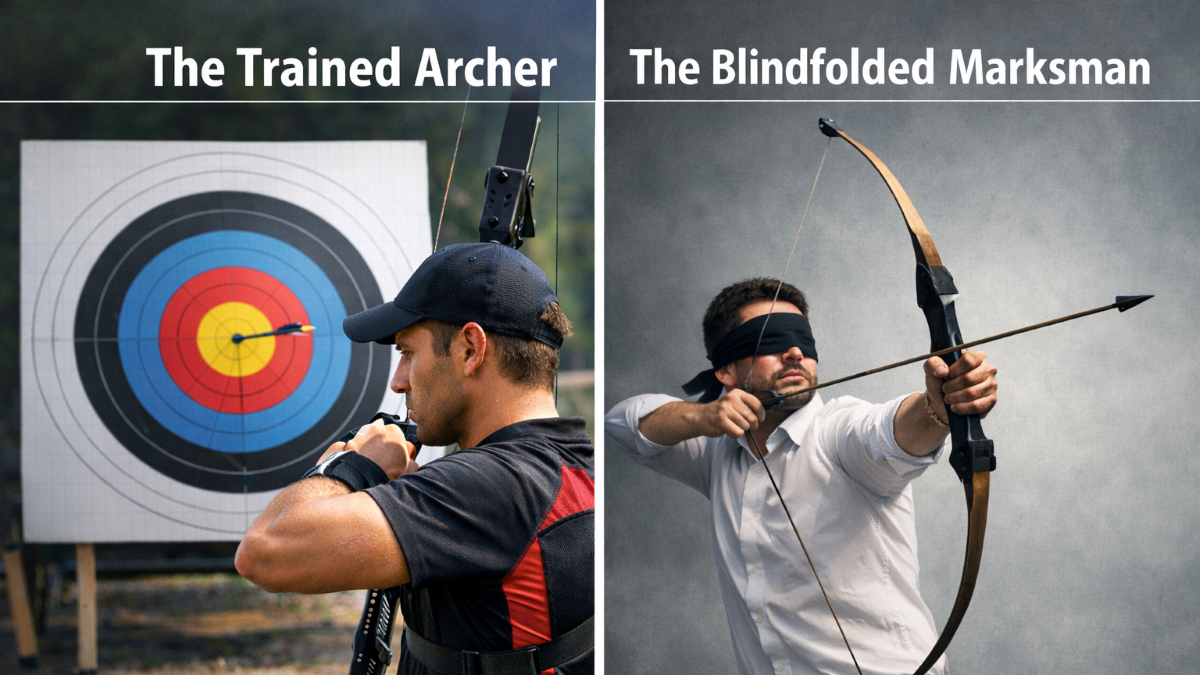
Why Breakthrough Innovation Requires Systematic Discovery, Not Creative Genius
Why Breakthrough Innovation Requires Systematic Discovery Not Creative Genius
Memory expert Jim Kwik says: “There’s no such thing as a good or bad memory; just a trained or untrained memory.”
The same applies to innovation: There’s no such thing as creative or uncreative teams; just trained or untrained teams.
After twenty years helping organizations innovate, I’ve observed something counterintuitive: an average team targeting validated unmet needs will outperform a brilliant team that doesn’t know what the customers’ unmet needs are.
For simplicity, this article focuses on identifying unmet needs among current customers to drive growth in a core market. Addressing these unmet needs will often also create differentiation, though the only way to ensure differentiation is to identify unmet needs among competitors’ customers as well.
James Dyson famously created 5,127 prototypes before his breakthrough vacuum. But most people miss the fact that his creativity was directed.
While Dyson likely didn’t use formal Jobs-to-Be-Done language, his thousands of experiments were guided by concrete performance problems with traditional vacuums, especially their tendency to lose suction as bags filled.
In Jobs-to-Be-Done terms, we’d say he was targeting outcomes like:
- Minimize the likelihood of suction loss
- Minimize the time required to clean effectively
- Minimize the number of steps required to replace bags
Whether Dyson called these “outcomes” or “design problems” doesn’t matter. What matters is he had specific targets. His prototypes weren’t random tinkering; each iteration addressed defined frustrations he’d identified through understanding how people struggled with existing vacuums.
This wasn’t creative genius; it was systematic discovery in action. Yet many organizations still chase creative genius instead of systematic understanding.
The Creativity Trap
Most of us have experienced this in brainstorming sessions: teams generate dozens of ideas, the energy is high, and Post-its cover the walls.
Then everything stalls.
Why? Because they don’t have a reliable way to identify which ideas address an unmet need. Hence, teams are left with a pile of possibilities and no way to evaluate them beyond gut feel and politics.
The impediment is not creativity; it’s clarity. Most teams assume customers cannot tell you what they need. They can, however, if you ask what they’re trying to accomplish rather than what solution they want.
Organizations pour resources into developing features customers don’t value because they solve problems that are unimportant, already well-satisfied, or don’t exist. They’re so focused on generating “innovative ideas” that they skip the four fundamental discovery questions:
- Who is the target customer?
- What job are they trying to get done?
- Where do they struggle to get the job done? Struggles point to outcomes that are important but going unsatisfied.
- What consequences do they experience when those outcomes remain unmet?
Discovery in Action
A middle school ranked last in district culture scores for “belonging.” The principal proposed adding a new “relationship-building” period before classes, something that had been tried and failed a decade earlier.
But one teacher asked: “What does ‘belonging’ actually mean to students?”
Instead of assuming, they asked students directly. The answers were specific:
- “I feel heard when people encourage me to speak up”
- “I know I matter when teachers remember things about me”
- “I feel like I belong when someone notices when I’m struggling”
Armed with these insights, the committee redirected existing resources toward what students actually valued. No new programs. No additional budget. No creative genius required.
Result: The school moved from last to first place in district culture rankings in one quarter. No mess. No risk. No budget. Just clarity.
The Systematic Alternative
Teams that master systematic discovery answer the four questions above before they generate a single idea.
This is what a trained innovation mind looks like: not someone who generates wild ideas, but someone who asks better questions.
Meanwhile, teams relying on creative genius are operating with incomplete information, generating ideas without knowing what success looks like to the customer, if anyone actually wants what they’re creating, or where current solutions fail.
No amount of creative brilliance overcomes that foundational blindness.
Why Organizations Cling to the Genius Myth
Three biases keep organizations trapped:
The Halo Effect makes us see only the breakthrough, not the discovery work that preceded it. Steve Jobs becomes a “creative genius” while his obsessive focus on understanding user needs gets forgotten.
Overconfidence Bias leads teams to trust their instincts over customer evidence. “We know our market” can prove costly.
Status Quo Bias makes believing in rare creative talent easier than developing systematic discovery capabilities. If innovation requires genius, failure is excusable. If it requires discipline, failure is a choice.
Discovery Democratizes Innovation
When teams understand what customers are trying to accomplish and where they struggle, creativity becomes focused and systematic rather than magical.
You don’t need to be the next Steve Jobs. You don’t need that mythical “creative type” on your team. You need to answer the four discovery questions listed above.
With these answers, generating solutions becomes straightforward. You’re solving defined problems, not hoping for inspiration.
This is why the Jobs-to-Be-Done methodology is so powerful. It transforms innovation from an art that requires rare talent into a discipline that can be learned, taught, and systematically applied.
The creativity isn’t in the idea generation; it’s in the systematic questioning that reveals opportunities others miss.
Train your team on the discovery process. Creativity naturally follows. Innovation success depends far more on clarity about unmet needs than on creative genius. Fit by construction, not by iteration.
Clarity, unlike genius, can be taught.
Tired of trying to iterate your way to product-market fit? I’m putting the final touches on a Customer Needs Guide that shows how to identify the right opportunities upstream, before ideation. Happy to share it when complete. Just message me.
Next time: “Why innovation doesn’t need to be messy, risky, or expensive.”