
Two Kinds of Creative Conviction: One Expresses Truth, the Other Discovers It
A few days ago, someone challenged me about the American record producer Rick Rubin’s philosophy that creators should “make what they love and not worry about the audience.” I’ve seen people on LinkedIn espousing this for product innovation, too, encouraging people to forget about customer discovery. Ugh. It’s not one against the other. These are two different types of creativity.
“Create from conviction,” say the artists. “Follow what feels true.”
Rick Rubin’s philosophy has inspired creators everywhere to make what they love and not worry about pleasing the crowd. In art, that is exactly right.
In art, conviction comes from within. The artist’s truth is personal and expressive. The work succeeds when it expresses something so authentic that others feel its honesty.
In product and service innovation, conviction must be obtained from customers, not from self. Here, the customer is the source of truth, not the creator. Product innovation succeeds when it helps people solve problems and accomplish their objectives.
Walmart, Amazon, and Costco do not sell art. They sell solutions that people buy to solve problems and accomplish their objectives. The success of those goods comes from understanding what people need and want and removing the friction that stands in their way.
The same applies to most successful innovators. James Dyson did not build 5,127 prototypes because he loved tinkering. He built them because he knew exactly which unmet outcomes he was targeting:
• Minimize suction loss
• Minimize cleaning time
• Minimize bag changes
His revolutionary cyclonic technology emerged because discovery fueled his creativity and gave it the direction necessary to succeed. Without that clarity, his thousands of prototypes would have been random experiments rather than purposeful iterations. That sequence matters.
Discover your target customers’ unmet needs (jobs and desired outcomes) and then generate solution ideas that address them. Discovery followed by creativity. You wouldn’t want your doctor to rely solely on creative instinct, would you? Like doctors, suppliers do better when they diagnose before they treat.
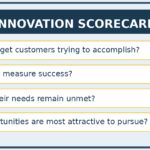
But you have to know what type of customer inputs to obtain and how to get them. Not all customer discovery processes are equal. Only the Jobs-to-Be-Done (JTBD) approach will reliably:
- Determine who the target customer is
- What they are trying to accomplish
- How they measure success
- Where they struggle
In product and service innovation, deep customer insight generates conviction about where to focus and what to do to create value for others. It enables us to make something “true” for the customer (meet their authentic need).
That is why research from McKinsey, CB Insights, and others consistently finds that the leading cause of innovation failure is not lack of funding, ideas, or being true to yourself; it’s misunderstanding the customer. This is the leading cause of new product failure.
Art and product innovation both seek truth.
The artist looks inward to express it.
The innovator looks outward to discover it.
Both are creative. Product innovation, however, requires discovering the customer’s truth first, then applying creativity with integrity, care, courage, and patience. Helping others accomplish their objectives is a noble art, too.
Art is the self-expression of truth. Product innovation is the expression of truth on behalf of another.
Both, at their best, are acts of love.
Sometimes the creator is also a consumer so they have a deep understanding of what customers want, and can drawn upon their own experience and conviction – great! But that’s generally not a good innovation strategy.
If this way of thinking resonates with you, I’m developing an ISO-certified, online, self-paced Level 1 course on Lean JTBD OS™ for the Global Innovation Management Institute. It’s designed to help innovation professionals reveal where to focus and what to do to create new value with confidence. Email me back if you’d like priority access to the waitlist.