
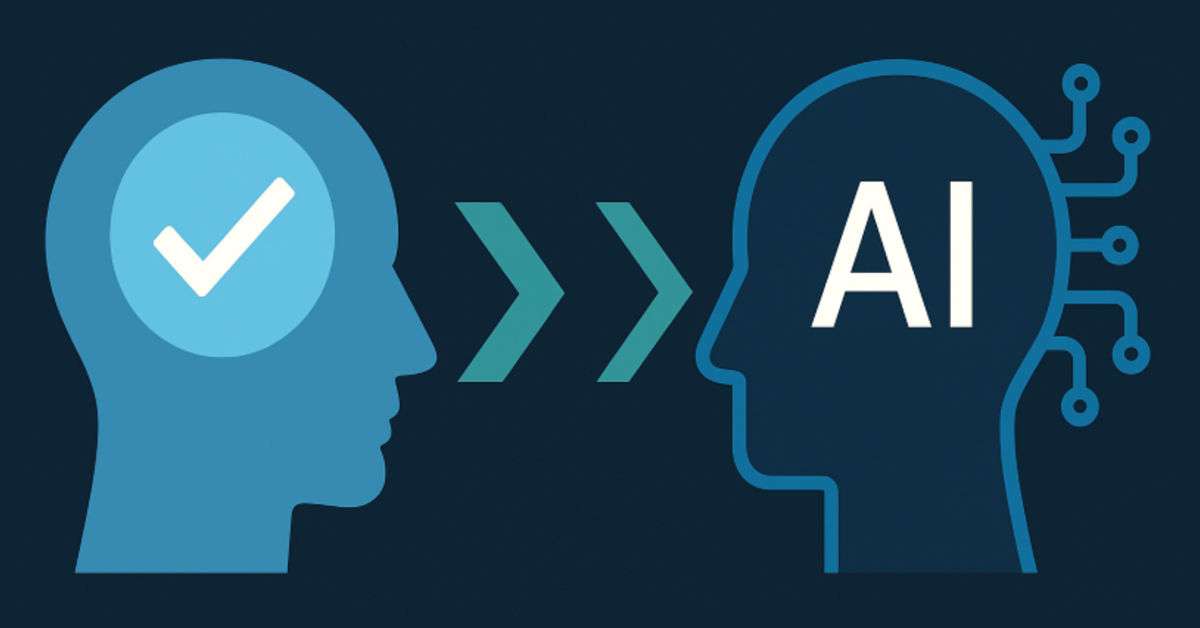
Why AI Makes Jobs-to-Be-Done More Critical, Not Less
As artificial intelligence rapidly transforms how organizations generate and test ideas, many innovation professionals are asking: Is the Jobs-to-Be-Done (JTBD) approach still necessary? Some believe that, with AI’s ability to process massive data and surface new concepts, traditional discovery can be skipped.
Yet the evidence and practice show that JTBD is more essential than ever. In fact, 73% of executives believe they understand their customers, while only 27% of customers agree. AI without JTBD amplifies this dangerous perception gap. Without it, your innovation efforts risk becoming faster but far less accurate and impactful.
Why JTBD Remains Foundational in an AI-Powered World
1. AI Spots Symptoms. JTBD Defines Real Progress.
AI excels at surfacing what customers complain about, like slow shipping, and recommends obvious solutions such as “go faster.” JTBD, by contrast, uncovers what customers are actually trying to accomplish. For instance, the real job might be “ensure equipment arrives when installation is scheduled,” not just speedy delivery. The best solution might involve synchronized arrival windows, not simply increasing speed.
2. AI Amplifies Assumptions. JTBD Challenges and Refines Them.
AI, when fed conventional product ideas or past patterns, simply scales what you already know like optimizing features that already exist. If your thinking is flawed, AI just helps you go in the wrong direction faster. JTBD forces you to clarify the underlying job and segment markets based on what customers want to achieve, not by products or demographics. Only then can AI truly accelerate your search for the best solution.
3. Only Skilled JTBD Interviewers Consistently Uncover Hidden Needs.
AI analyzes what customers say but takes feedback at face value. A customer who says, “I want better reports,” will get improved dashboards. A JTBD practitioner knows to ask, “What are you trying to do with those reports?” and, through careful, clarifying questions, will discover the true job: “minimize time to spot accounts at risk of churn.” This kind of insight comes only through a sequence of probing questions and cannot yet be automated.
Real innovation breakthroughs rely on human-led discovery until AI can master live, nuanced conversations, skilled JTBD interviewers are the most reliable way to surface these deeper jobs and outcomes.
JTBD vs. AI: A Quick Comparison
To use AI effectively in innovation, you first need to understand how it differs from Jobs-to-Be-Done. This table clarifies the distinct roles each plays and why JTBD must come first.
JTBD (Jobs-to-Be-Done) | AI (Artificial Intelligence) |
Reveals what customers are trying to accomplish | Detects what customers say or do |
Clarifies the real underlying problem | Optimizes existing patterns or product ideas |
Surfaces unmet needs—including hidden or latent ones | Amplifies known preferences or complaints |
Requires human-led interviews and judgment | Automates analysis, summarization, and content generation |
Guides where to focus innovation | Accelerates how fast you can execute once focus is clear |
“Using AI without JTBD is like treating symptoms without diagnosing the disease.”
Real-World Example
A logistics company used AI to speed up deliveries but saw little change in customer satisfaction. JTBD interviews revealed that customers needed deliveries coordinated precisely with installation teams, not just delivered faster. By focusing on solving that specific job, the company increased satisfaction and revenue far more than with AI-driven optimizations alone.
Key Takeaway
Lean JTBD OS™ is a practical, accessible, qualitative-only JTBD process augmented with AI to help innovation teams identify and prioritize unmet customer needs so they can guide AI tools toward solving the right problems, not just move faster.
•Without JTBD, using AI is like flooring the gas pedal with no clear destination; it’s fast, but aimless.
•JTBD clarifies the real problem, the actual job to be done, and what success looks like for your customer.
•AI becomes most effective after you have defined the right jobs and outcomes. Then it rapidly explores the best ways to deliver customer results.
In summary:
JTBD isn’t less important as AI advances; it becomes even more central. Lean JTBD OS™ gives you the discipline and accuracy needed to make the most of today’s powerful innovation tools. Start with JTBD to set the right direction. Use AI to accelerate your journey along that path.
Where are you seeing AI fall short in delivering real customer value?
I’d love to hear your perspective. Feel free to email me at [email protected]
More Innovation Revelations:
How to Create Strong Product-Market Fit at Concept Creation
Why Strategy Keeps Missing the Mark – And How JTBD Fixes It
How to Fix Innovation with 5 Growth Strategies and 6 Questions