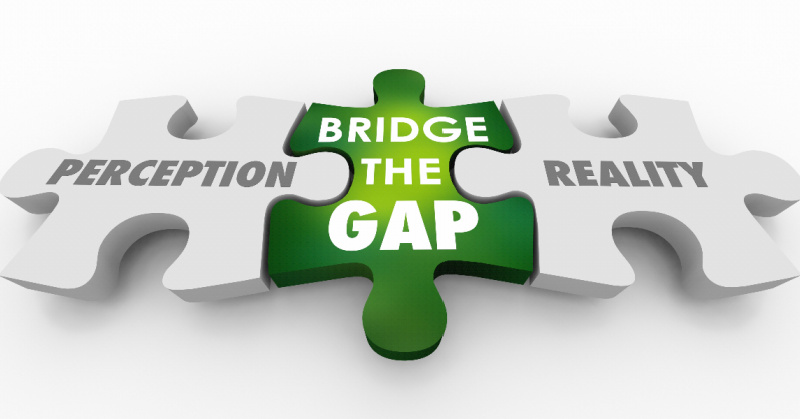
The perception gap between what we think customers want and what they actually need isn’t just inconvenient — it’s dangerous. Here’s how to bridge it before it’s too late.
Many innovation leaders believe they already know what customers need. But a 2022 Journal of Management review reveals a critical blind spot: acting on unverified assumptions. Among the most persistent? Assuming we understand customer needs without checking.
Most companies capture data without gaining insight into what customers are trying to accomplish and where they still struggle. Until now, we didn’t know what a customer need really is—separate and distinct from products and services. That changes the game.
Lean JTBD OS™ was developed to solve a specific problem: most innovation teams don’t have a reliable, repeatable way to uncover what customers are really trying to accomplish—before building solutions. This system closes that gap by revealing the customer’s actual job to be done, enabling teams to align their efforts with real needs, not assumptions.
The issue isn’t competence or effort. Human psychology creates predictable blind spots—and those blind spots are often where unmet needs lie. Our assumptions are strongest, our expertise deepest, and our confidence highest precisely where we’re most likely to miss critical insights.
Consider Quibi. Its founders raised $1.75 billion, certain that consumers wanted premium short-form video on mobile. They had the research. They had the trends. Six months later, they shut down. The job they thought customers needed done—filling “in-between moments” with premium mobile content—wasn’t actually a job customers were trying to do. They were already getting their entertainment jobs done elsewhere, for free.
When Confidence Becomes a Liability
Confidence in our customer knowledge often leads to misunderstanding those needs—to the point people don’t buy what we make. Evidently, we aren’t very good at distinguishing what we know (based on valid external evidence) from what we think we know.
We solve problems we think customers struggle with. But unless we’re proactively talking with them to uncover what they’re trying to accomplish, how they measure success, and where they struggle—we’re very likely missing the mark.
Companies measure engagement, track usage, and analyze satisfaction scores. But these metrics tell us what customers do—not what they’re trying to accomplish or how they define success.
It’s like measuring how often someone uses a hammer without asking if the picture actually got hung—or if hanging the picture was even the real job.
The Psychology That Works Against Us
These patterns are common, but not inevitable. Once you recognize them, you can compensate:
The Curse of Knowledge – Deep product knowledge blinds us. Our brains create neural shortcuts that make the complex feel simple. What seems self-evident to us may be incomprehensible to someone attempting to complete an unfamiliar job. Knowing this helps us seek out beginner perspectives.
Proximity Bias – Familiarity creates false confidence. Daily interaction with customers and products convinces us we know what’s needed. But we evaluate opportunities through the lens of what our tools can build—not what customers actually need done. Recognizing this helps us step outside our solution space.
False Consensus Effect – We project our own priorities onto customers. If efficiency drives us, we may assume customers hire solutions for speed—when they might be seeking confidence, control, or recognition. These assumptions blind us to real opportunities. Awareness helps us ask better, more open-ended questions.
This projection affects how we interpret feedback, conduct interviews, and define “value.” If we’re not aware of it, we risk designing solutions around our logic instead of the customer’s reality.
Fortunately, we can correct these tendencies once we know they exist.
The Translation Problem
The perception gap often hides in plain sight. Customers say, “make it easier to use”—but easier for whom? To do what? By what measure?
We interpret feedback through our own lens. “Higher quality” might mean durability to us—but to the customer, it might mean, “doesn’t make me look foolish in front of my peers.”
JTBD closes this gap by revealing what customers are really trying to achieve, how they define success, and where they still struggle. Traditional research evaluates whether a product met customer expectations—expectations shaped by existing solutions. JTBD asks: “How satisfied are you with your ability to get the job done?”
That shift reveals a different kind of truth. Many so-called “latent” or “unarticulated” needs aren’t hidden—they simply haven’t been surfaced because we weren’t asking the right questions. JTBD changes that. It reframes the conversation and exposes opportunities that have always been there—just outside the frame of traditional research.
Typically, customers should not be asked to specify solutions—that’s not their expertise. But they can describe what they’re trying to accomplish and where they struggle—when we know how to ask.
Why Good Customers Mislead
Even loyal, satisfied customers contribute to the disconnect. They may protect the relationship or avoid conflict. They adapt to our limitations rather than challenge them. They suggest incremental tweaks rather than question our assumptions.
Then, sometimes they just leave, taking their insights with them.
Six Questions That Close the Perception Gap
To close the gap between what we think customers want and what they actually need, we must ask different questions. These six—adapted from journalism’s fundamentals—reveal the reality hiding behind our assumptions:
- Who is your target customer? The group of people you serve (or want to serve) by helping them get their job(s) done better.
- Why do they hire your product or service? What job are they trying to accomplish?
- When, where, and why does this job arise? Identify the situations, environments, and triggers that make the job important.
- What are the steps they must go through to get the job done—independent of your solution?
- Where in the process do they still struggle? These struggles are unmet needs and your opportunities.
- What are the consequences if these struggles go unresolved? Understand what’s at stake—financially, operationally, emotionally, socially.
These questions force us past our assumptions into the customer’s world. You won’t just hear what customers say—you’ll understand what they’re trying to accomplish and why existing solutions are missing the mark.
Just as a construction blueprint gives clarity to build with confidence, the answers to these six questions help you create a Customer Needs Blueprint™ so your team knows where to focus and what to do to create new value.
When Job Discovery Becomes Essential
The perception gap widens most dangerously in certain situations. Invest in job discovery when:
- Growth plateaus despite feature additions (the gap is costing you)
- Customer segments demand contradictory solutions (you’re missing the real job)
- You’re creating new categories or markets (no existing data to rely on)
- Feedback patterns defy logic (a clear sign of disconnect)
Iterate quickly when:
- The job is well-understood and you’re optimizing execution
- Feedback is specific and convergent
- You’re refining established workflows
- The perception gap has already been closed
A Different Path
Most innovation teams are confident they know what customers need. But that confidence often comes from intuition, experience, or surface-level feedback—not from structured, repeatable discovery.
Lean JTBD OS™ provides that discovery system. It gives you a practical, proven way to reveal what customers really want—so you can build offerings that win.
Ready to stop guessing what customers want?
Join me live on July 2nd at 9:00 AM ET for my talk, Product-Market Fit at Concept Creation: How 6 Simple Questions Create Winning Concepts, hosted by the Global Innovation Management Institute (GIMI).
You’ll learn a fast, proven way to uncover your customers’ real needs—before you build—so you can create offerings that win in the market.
👉 Register now and select July 2nd in the Date & Time section.
Ask yourself: What job do customers really hire your product to do? This session will help you find out.